

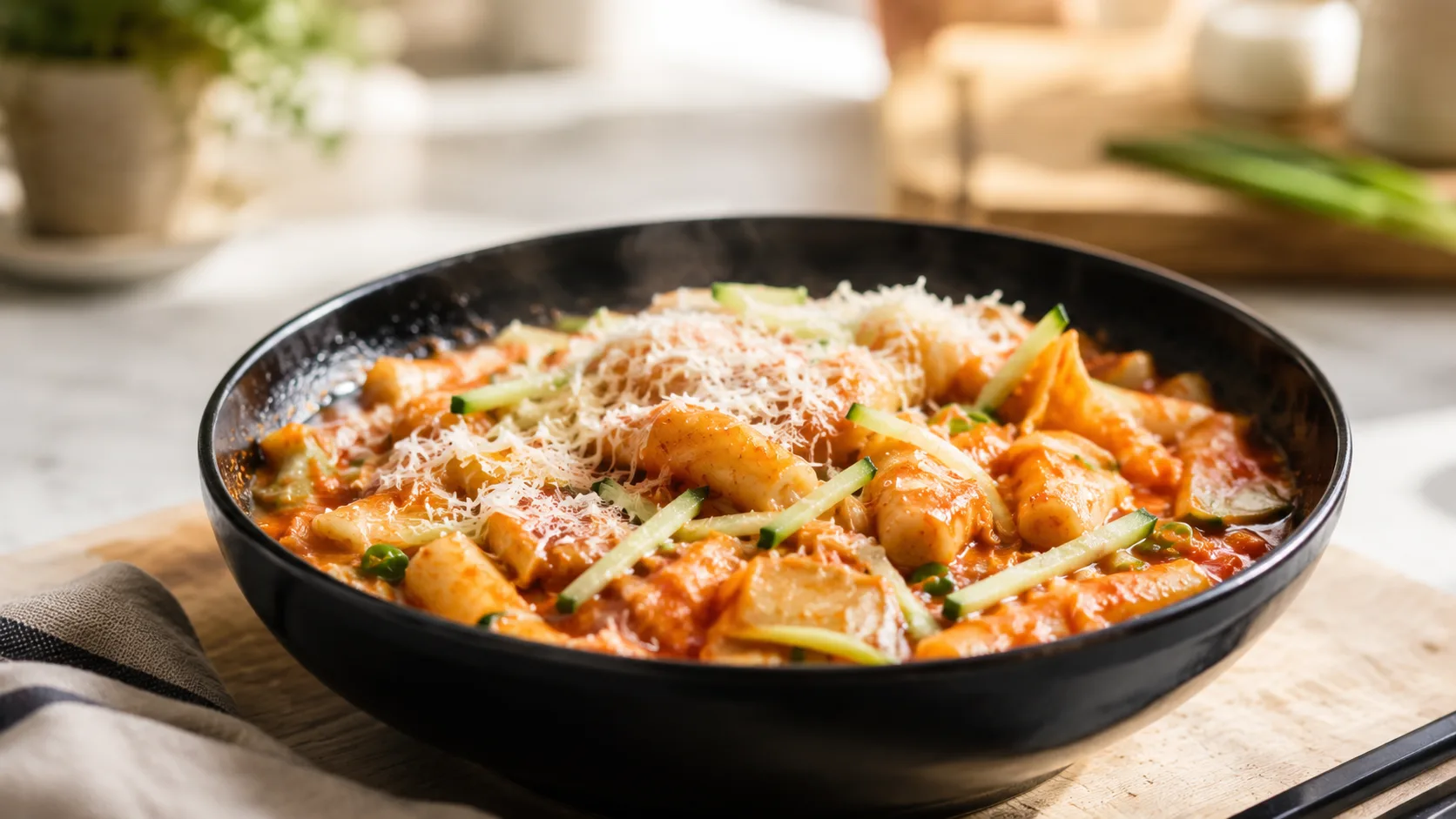
Homemade Tteokbokki with Vegetables and Spicy Honey
Chewy rice cakes in a thick, rich and piquant sauce based on Korean gochujang paste. The rice dough is made by hand, rolled into logs and cut into pieces that become soft, springy and sauce-soaked as they simmer. Gochujang adds heat and fermented depth, fish sauce umami, lemon or tamarind a tang, and spicy honey creates a balanced sweet-and-piquant finish.
Preparation
- 1
Pour the rice flour into a bowl, add a pinch of salt and mix.
- 2
Gradually pour in boiling water in small amounts, stirring with a spoon at first, then kneading by hand once it cools; the dough should be dense but pliable.
- 3
Knead until it's like soft modelling clay (not crumbly or runny); add water or flour as needed.
- 4
Lightly oil your hands with sesame oil and keep kneading so the dough gets smoother and less sticky.
- 5
While the dough is warm, pinch off pieces and roll into thin logs, covering the finished parts; cut into ~4–5 cm pieces.
- 6
Make the sauce: in a pan mix gochujang, fish sauce, lemon/tamarind, sugar, dry stock, spicy honey and water, stirring until smooth.
- 7
Bring to a gentle simmer over medium heat until the gochujang dissolves; taste and adjust (honey — sweeter, gochujang — spicier, lemon — tang, soy/fish — saltiness).
- 8
Add the sliced bamboo, soybean sprouts and other vegetables or tofu to the simmering sauce.
- 9
Add the rice cakes, stir to coat and simmer ~5 minutes until the sauce thickens and the cakes turn soft and springy (add hot water if needed).
- 10
Optionally add mozzarella at the end and cover 1–2 minutes; serve hot, sprinkled with green onion, sesame or more spicy honey.
Chef's tips
- —Add water to the dough gradually — different rice flours absorb different amounts.
- —Work with warm dough: once cool it cracks and shapes worse.
- —Form even-sized sticks for uniform cooking and don't leave the dough uncovered.
- —Stir the sauce regularly — the rice cakes can stick to the bottom.
- —Don't overcook the tteokbokki, or they get overly soft.
- —For a milder version use 2 tbsp gochujang and a bit more honey; for richness swap the water for stock.
What to pair it with
Homemade tteokbokki pair well with light, fresh or crunchy additions that balance the thick spicy sauce.
- kimchi
- pickles
- cabbage salad
- crispy tofu
- Korean fish cakes
- boiled eggs
- roasted seaweed
- rice
- stir-fry vegetables
- Korean pancakes
✨ Perfect match
An especially good combination is hot spicy tteokbokki, cool pickles and crispy tofu. The pickles refresh, the tofu adds substance, and the spicy honey softens the rich heat of the gochujang.